What is a bazaar? Short version: a bazaar is a traditional, multi-vendor marketplace where independent sellers offer food, textiles, crafts, and more, often with negotiable prices.
What does “bazaar” mean?
The word “bazaar” comes from the Persian word bāzār and spread into Turkish, Arabic, and then European languages.
Historically, bazaars were commercial hubs where traders exchanged textiles, spices, crafts, tools, and services. But a bazaar wasn’t only about buying things. It was also social infrastructure: people met there, shared news, formed guilds, and negotiated.
That’s why “bazaar” still suggests more than just “a place to shop.” It implies variety, bargaining, and community.

Why is it called a “bazaar”?
Because it describes a network of stalls or small shops, grouped close together, often organized by craft (for example: coppersmiths on one street, carpet sellers on another). Prices are flexible, competition is visible, and most merchants are independent.
The format is different from a single-brand store or a fixed-price supermarket. The word “bazaar” became the label for that traditional, dense, street-level style of commerce.
Bazaar vs. market: what’s the real difference?
| Feature | Bazaar | Market |
|---|---|---|
| Layout | Many stalls / small shops close together, often walkable or covered | Any format: open-air stalls, farmers’ stands, indoor halls, supermarkets, even online |
| Pricing | Often negotiable; price competition between vendors is normal | Can be fixed (supermarket) or negotiable (street market), depends on the type |
| Ownership | Many micro-merchants in one place | Could be many merchants OR just one company (like a supermarket chain) |
| Assortment | Mix of crafts, textiles, produce, spices, daily goods, souvenirs | Anything — from vegetables at a farmers’ market to packaged goods in a chain grocery store |
| Experience | Social, sensory, noisy, visual, personal | Can be social (outdoor weekend market) or purely functional (grab-and-go supermarket) |
Are bazaars or farmers’ markets cheaper?
Sometimes yes, sometimes no. It depends on what you’re buying.
Supply chain length
If you buy directly from the grower or maker, there’s less middleman cost. That can mean better value for fresh produce, eggs, cheese, local honey, etc.
Seasonality
Seasonal fruits and vegetables can be cheaper (and taste better) at a bazaar or farmers’ market than in a supermarket. Off-season or imported items can actually be more expensive.
Price competition and bargaining
In a bazaar, vendors are side by side. You can compare quality and price in real time, and in many cultures bargaining is expected. That can lower your final price, unless you’re obviously a tourist and they start high.
Quick rule:
Fresh, local, in season → bazaars / farmers’ markets are often cheaper or at least better quality for the price.
Packaged, branded, imported → supermarkets often win on consistency and discounts.
Are markets cheaper than supermarkets?
It depends on your basket.
Supermarkets are optimized for logistics and stable pricing. They lock in deals with suppliers and push promotions on packaged goods, dairy, canned food, household items, etc.
Street markets and bazaars are optimized for freshness, flexibility, and direct sourcing. You can absolutely find better deals on produce — especially near closing time. But if you’re comparing, say, big-brand packaged pasta or bottled soda, the supermarket usually wins.
So “markets are always cheaper” is false. “Markets can be cheaper for fresh, local items” is usually true.
“Bazaar” or “bizarre”?
These two words sound similar in English, but mean completely different things:
Bazaar (b-a-z-a-a-r) = a marketplace with many vendors.
Bizarre (b-i-z-a-r-r-e) = strange, unusual, weird.
Example:
“I found a beautiful handmade carpet in the bazaar.”
NOT
“I found a beautiful handmade carpet in the bizarre.”
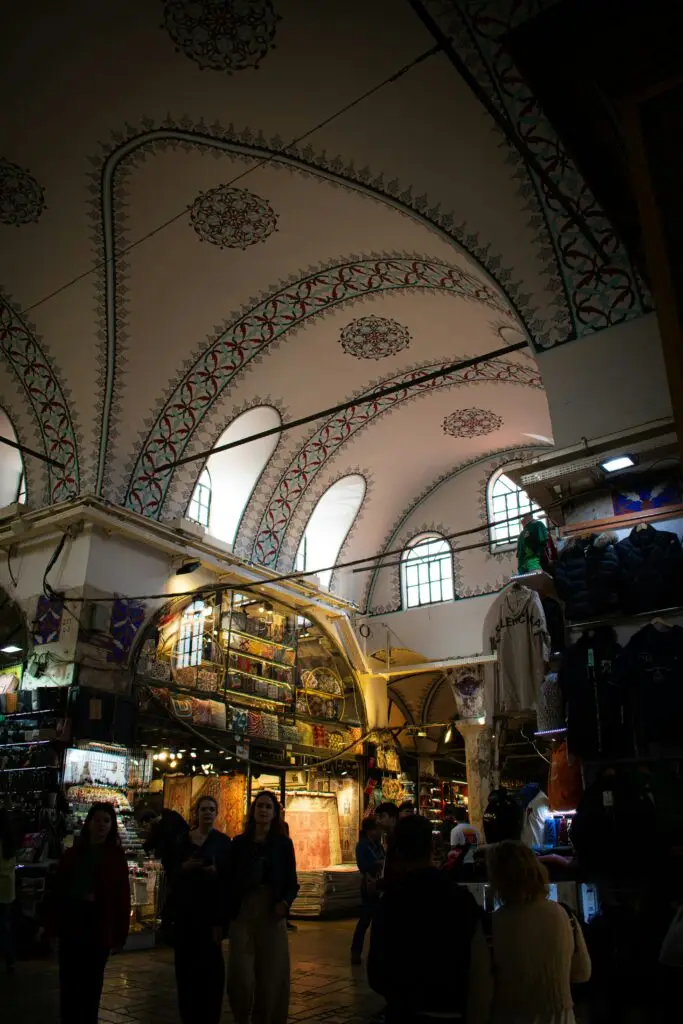
Famous bazaars around the world
Grand Bazaar, Istanbul (Kapalıçarşı)
One of the oldest and largest covered bazaars in the world. Jewelry, textiles, carpets, ceramics, metalwork, spices, packed into a historic maze.
Marrakech Souks, Morocco
Spice stalls, leather workshops, brass lanterns, traditional cosmetics, herbal remedies — all squeezed into winding alleys.
Chandni Chowk, Delhi
A legendary bazaar for fabric, jewelry, sweets, street food, wedding items, and basically anything else you can imagine.
Chatuchak Weekend Market, Bangkok
A modern version of a bazaar: thousands of vendors open on weekends, selling clothes, art, plants, furniture, street food.
Khan el-Khalili, Cairo
Goldsmiths, perfume sellers, calligraphy, coffeehouses, and one of the best places in the world to sit, sip tea, and people-watch.
Looking for weekly street markets and local bazaars near you?
Browse the latest listings on BazaarFinder.
How to shop a bazaar like a pro
Walk first, buy second. Compare before committing.
Ask questions about materials, origin, or freshness.
Expect polite bargaining in many countries — it’s normal, not rude.
Carry small bills. It speeds up negotiation and checkout.
Go early for the best selection, go late for the best discounts.
Photo by Sara Darcaj on Unsplash 12
Photo by Uladzislau Petrushkevich on Unsplash
